

Five practical lessons to build rights‑first, privacy-preserving DM abuse detection that reduces harm and keeps humans in the loop.

AI scores each DM in context to detect grooming patterns, explain score changes, and produce concise alerts for fast human review.

Grooming risk appears in conversation shifts; track DM threads, not isolated messages, to spot escalation early.

UAE audit rules for child-safety AI: report precision/recall, log thresholds and reviewer actions, revalidate quarterly.
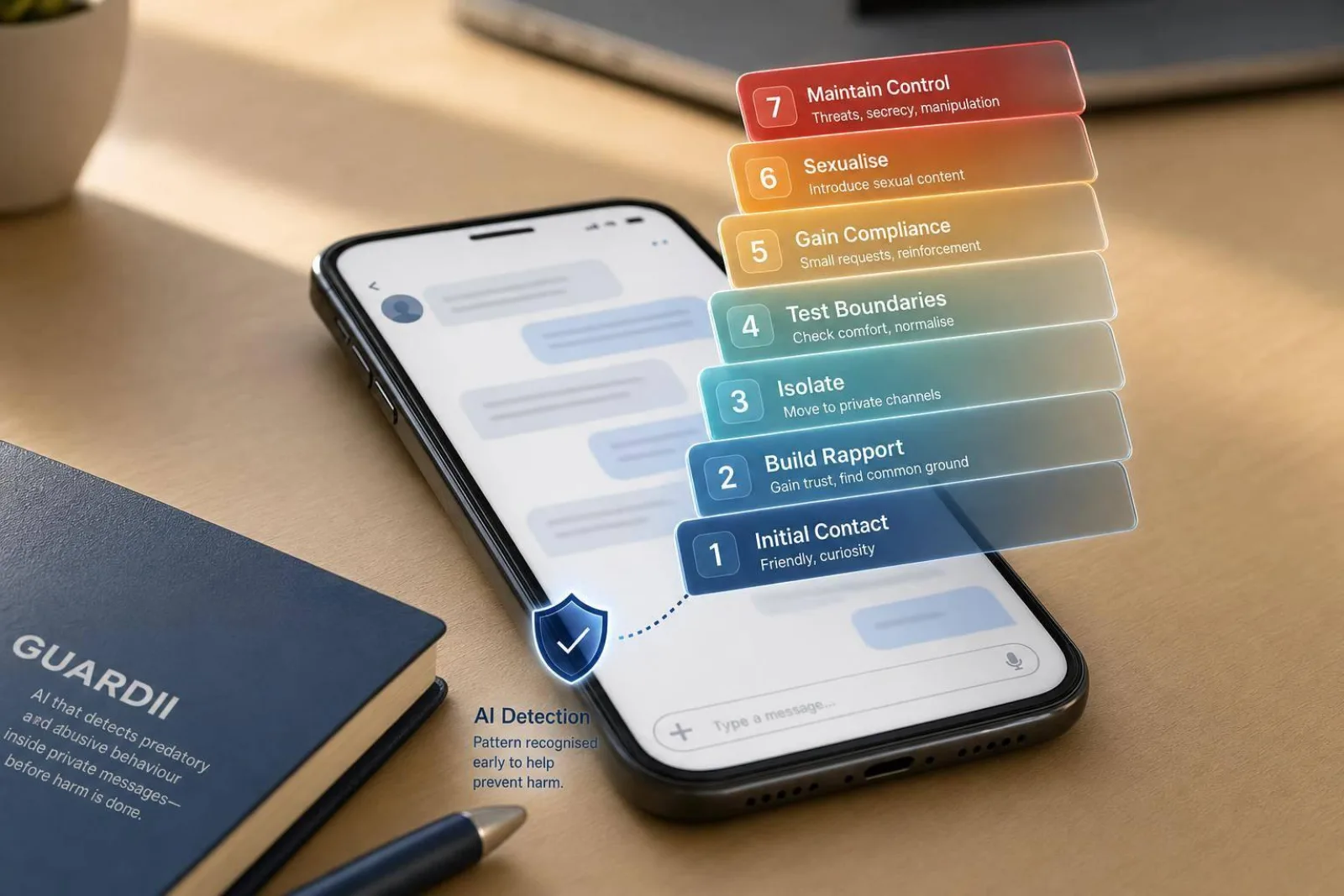
Grooming in DMs unfolds as a predictable escalation; AI spots the sequence from compliments to sextortion before explicit messages appear.

Act fast: report suspected child exploitation to platforms, hotlines, and police; preserve full-screen evidence, UTC timestamps, and report IDs.

Explains precision vs recall trade-offs in CSAM detection and why lower thresholds plus layered review improve early detection.

Behavior-based AI to spot grooming in private messages while protecting children's privacy and family trust.

India asks Meta to align content policies with Indian laws and strengthen safeguards against deepfakes and harmful content.
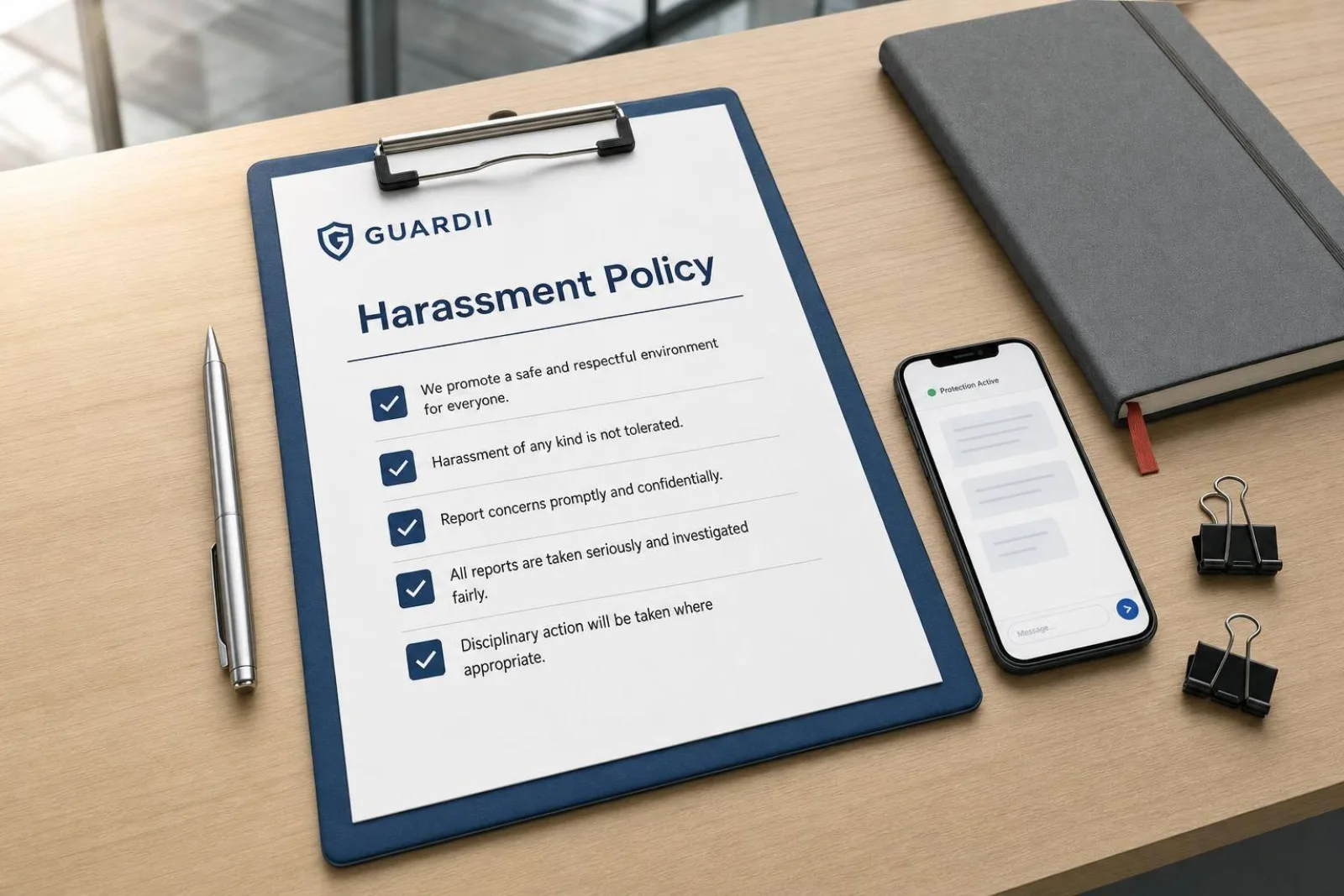
Create a tailored anti-harassment policy draft for your organization in minutes, with practical language ready for review and internal use.
Perspectives
Long-form analysis from the Guardii team on detection, regulation and online-safety architecture.
- Perspectives // CoverageProtecting women and children in a 200-language city
Manipulation patterns are universal; their linguistic markers are not. Translation-based detection fails predictably where predator and victim move between three languages in one conversation.
28 Apr 2026 · 6 min readRead More → - Perspectives // ArchitectureWhat 'agentic AI' actually means in operational government infrastructure
The UAE has directed that 50% of government sectors run on agentic AI within two years. Here is what that means architecturally, and where human judgment stays decisive.
22 Apr 2026 · 6 min readRead More → - Perspectives // ComplianceWhy behavioural pattern detection is now a regulatory requirement, not an option
Federal Decree-Law No. 26 of 2025 mandates proactive AI-driven detection of harmful content targeting minors, fully enforceable on 1 January 2027 — a standard keyword-matching and hash systems cannot meet.
15 Apr 2026 · 6 min readRead More →