

How to Spot Online Grooming Signs
Online grooming often looks small at first: private chats, deleted messages, sudden secrecy, and gifts from someone a child met online. I’d focus less on one odd moment and more on a pattern across devices, mood, and behavior.
Here’s the short version:
- Watch for online predator warning signs like secrecy on devices like fast screen switching, hidden chats, and messages that move from public spaces to DMs. Using AI social media monitoring can help identify these shifts early.
- Notice offline changes such as panic around notifications, withdrawal, unexplained gift cards, or sexual language that doesn’t fit the child’s age.
- Act calmly and fast by talking without blame, saving screenshots, logging usernames and dates, and reporting when risk looks high.
- Look at groups of signs together. One sign may mean little. Two or three at once can mean much more.
- Reporting is low. The article notes that fewer than 10% of grooming incidents are reported, which means many cases may stay hidden.
A simple way to think about it: normal privacy is broad; high-risk secrecy is focused around one app, one contact, or one new behavior pattern.
| What I’d look for | Lower concern | Higher concern |
|---|---|---|
| Device use | General desire for privacy | Hiding one app or one contact again and again |
| Messaging | Chatting with friends | Moving to private apps at a stranger’s request |
| Money/gifts | Asking for game credits | Unexpected gifts, digital credits, or gift cards |
| Mood | Usual teen ups and downs | Panic, flatness, or withdrawal tied to online contact |
If I saw these signs lining up at the same time, I’d treat that as a safety issue, not just a phase.
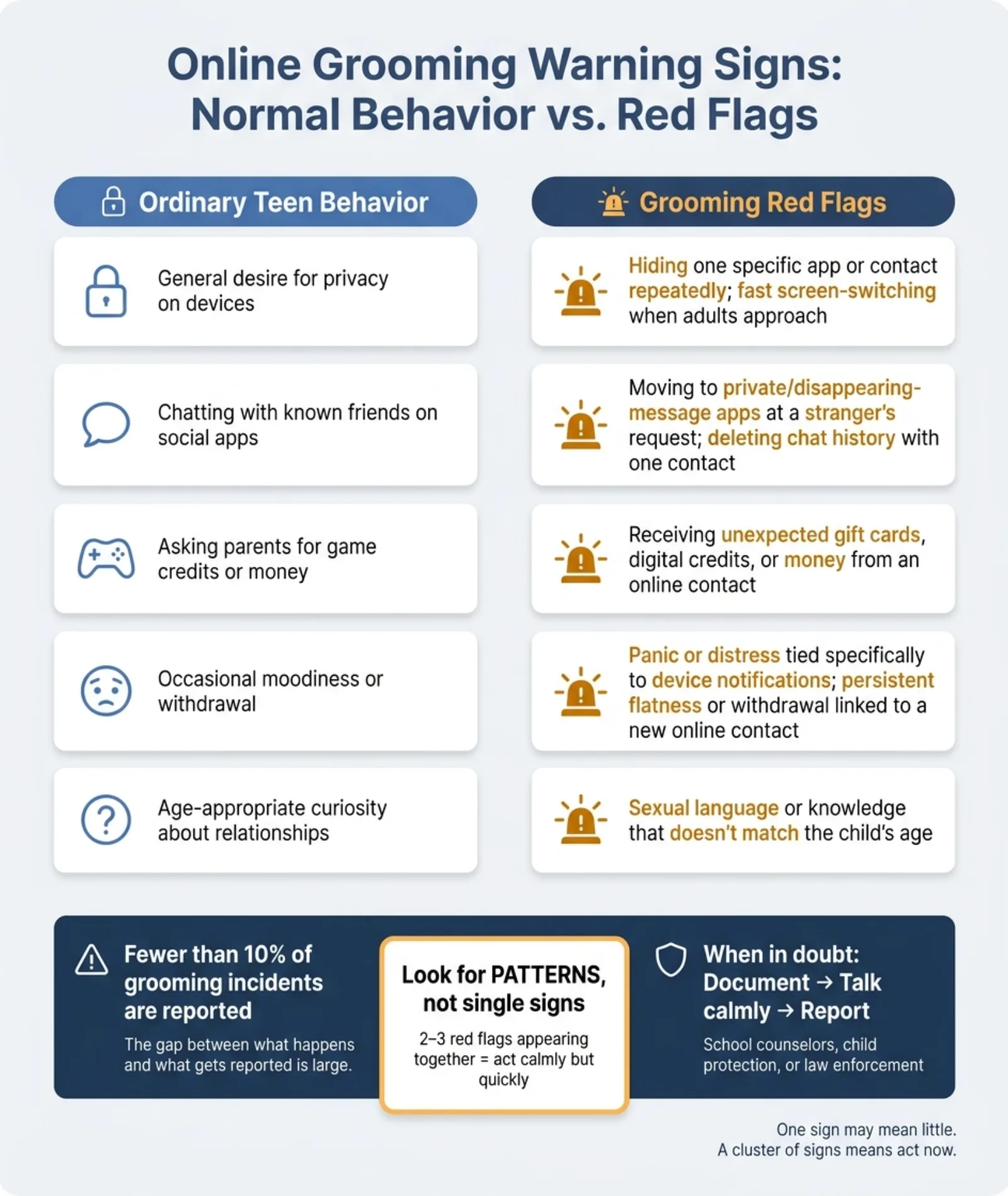
Online Grooming Warning Signs: Normal Teen Behavior vs. Red Flags
5 Warning Signs of Cyber Grooming
sbb-itb-47c24b3
Device and Messaging Red Flags to Watch For
Online grooming often starts in private chats or on apps with disappearing messages. In many cases, the first signs adults notice show up on the device itself.
Once secrecy starts on a phone or tablet, messaging habits often tell you a lot more.
Deleted Chats and Sudden Screen-Switching
One common sign is a child quickly closing an app or flipping the phone face-down when an adult walks in. A single reaction like that doesn't mean much. Kids do that sometimes. But if it keeps happening around one app or one contact, that deserves a closer look.
It's also smart to watch for disappearing messages or deleted chat threads connected to one person.
Contact Patterns That May Signal Grooming
Pay attention if someone pushes a child to leave a public platform and continue the conversation on a private app. That matters even more when it happens right after compliments or questions about age.
That kind of shift can be a way to get away from platform rules, reporting tools, or adult oversight. This is why understanding how AI detects predator risks in private messages is becoming a vital part of digital safety.
Normal Privacy vs. High-Risk Secrecy: A Side-by-Side Look
| Behavior | Likely Explanation | Risk Level |
|---|---|---|
| Moving to a private app at a stranger's request | Evading monitoring or platform filters | High |
| Deleting chat history with one specific contact | Systematic removal of evidence of a relationship with an adult | High |
| Receiving gift cards from an unknown contact | Unsolicited gifts used to build obligation or secrecy | High |
| Late-night messaging with an unknown or much older contact | Occasional insomnia or chatting with school friends | Moderate - if the contact is unknown or much older, this is a major red flag |
When these device signs show up alongside mood changes offline, it starts to look less like normal privacy and more like a pattern that needs attention.
Behavioral and Emotional Changes to Notice Offline
Device behavior is only part of the story. When secrecy starts online, the next clues often show up offline too - in mood, money, and day-to-day behavior. The goal isn't to overreact to every rough week. It's to spot changes that deserve a closer look and separate them from normal growing pains.
Mood Shifts Tied to Online Activity
Pay attention to sudden anxiety, irritability, or panic linked to notifications or phone checks. That's more specific than ordinary teen moodiness.
Withdrawal can matter too. If a child who used to talk openly starts pulling back from family conversations, loses interest in activities they once liked, or seems flat, detached, or unusually quiet for long stretches, note when that change began. Then look at whether it lines up with a new online contact or app that already seems secretive.
Unexplained Gifts, Money, or Age-Inappropriate Sexual Behavior
Money and gifts can be another offline clue. Gift cards, digital credits, or other unexpected gifts from someone a child met online can point to a pattern: a compliment, then questions about age or location, then a gift.
Age-inappropriate sexual language or knowledge that doesn't fit the child's age is another red flag people often miss. If a child starts using terms or talking about scenarios that don't match their age or experience, that shift calls for a calm, direct conversation.
Common Teen Behavior vs. Patterns That Need Attention
Use these contrasts to tell the difference between normal teen behavior and patterns that may point to grooming.
| Ordinary Adolescent Behavior | Red Flags |
|---|---|
| General moodiness or desire for privacy | Intense distress or panic specifically tied to device notifications or checks |
| Age-appropriate curiosity about relationships | Sexual language or knowledge that doesn't fit the child's age |
| Asking parents for game credits or money | Unexpected gifts or money from online contacts |
| Occasional withdrawal or bad moods | Persistent flatness, detachment, or unusual quiet that started around a new online contact |
When two or three of these patterns show up at the same time, that cluster matters much more than any single sign on its own.
What to Do When You Notice Grooming Signs
When you see a group of warning signs, move fast. The next step matters. So does your tone. A calm response can help a child feel safe enough to open up. A harsh one can make them pull back.
Start with Calm Conversations and a Device Review
Stay calm. Ask simple, direct questions like: "Who have you been talking to lately?" or "Has anyone online made you uncomfortable?" Make it clear that the child is not in trouble. You’re there to help, not punish.
If the child is present and it’s safe to do so, go through privacy settings and contact lists together. Keep the mood steady and matter-of-fact. The goal is to understand what’s happening without making the child feel blamed.
How to Document Evidence and Report Your Concerns
After the conversation and device check, save anything suspicious before it vanishes. Take screenshots. Record dates, usernames, and platforms. Small details can matter later.
Then report the concern based on the level of risk. If the situation is early or still unclear, school counselors or safeguarding staff are often a good first step. If the danger seems higher, contact child protection authorities or law enforcement.
Using Behavior-Based Monitoring in Higher-Risk Settings
In schools and clubs, these same warning signs can show up across many accounts and messages. That’s why pattern-based monitoring can help in higher-risk settings.
It can spot behavior like:
- secrecy
- switching platforms
- harmful context in private messages
This kind of monitoring helps staff see patterns that might be easy to miss when looking at one message at a time.
Conclusion: Look for Patterns, Not Just One Sign
Taken together, the device clues and offline changes above point to a pattern, not a single event. Online grooming almost never appears as one obvious moment. It tends to build over time, step by step. The main takeaway is simple: look for patterns, not isolated signs.
A child who suddenly hides their screen isn't automatically at risk. But a child who hides their screen, gets unexplained gifts, becomes more secretive, and starts spending more time in private chats? That mix calls for a calm, careful response.
That's why behavior patterns matter more than single words or one-off moments. Device clues and behavior changes mean more when you read them together. Secrecy by itself can be normal teen privacy. Secrecy plus mood swings plus repeated private messaging paints a very different picture. Adults who understand that difference are in a better spot to step in at the right time - with calm, not panic.
Because fewer than 10% of grooming incidents are reported [1], the gap between what is happening and what gets reported is large. Calm documentation, timely escalation, and behavior-based monitoring can help narrow that gap.
FAQs
What age groups are most at risk?
Online predators often go after children they see as easier to influence. That can include kids dealing with loneliness, family stress, or low self-esteem.
Age matters less than vulnerability. In many cases, children and teens who spend a lot of time on messaging apps, social media, and gaming platforms may face more risk, especially if they don’t seem to have strong support systems around them.
How can I bring this up without making my child shut down?
Keep the conversation collaborative, not accusatory. Treat your child like a partner in staying safe online, not someone on trial.
Use neutral, open-ended questions. For example:
"I've been reading about how online interactions can sometimes change over time; have you ever felt uncomfortable or pressured by someone you've met online?"
Put the focus on outside risks, not on your child’s choices. If a certain pattern worries you, ask for their view first.
When should I report it instead of just monitoring?
Report it as soon as you spot red flags, like requests for secrecy, pressure to move the conversation to another platform, or inappropriate questions. Don’t wait until physical or emotional harm has already happened.
Early reporting matters because grooming often follows familiar patterns and can escalate fast. Acting early gives adults, platforms, or law enforcement a chance to step in before a child becomes more involved or faces further harm.