
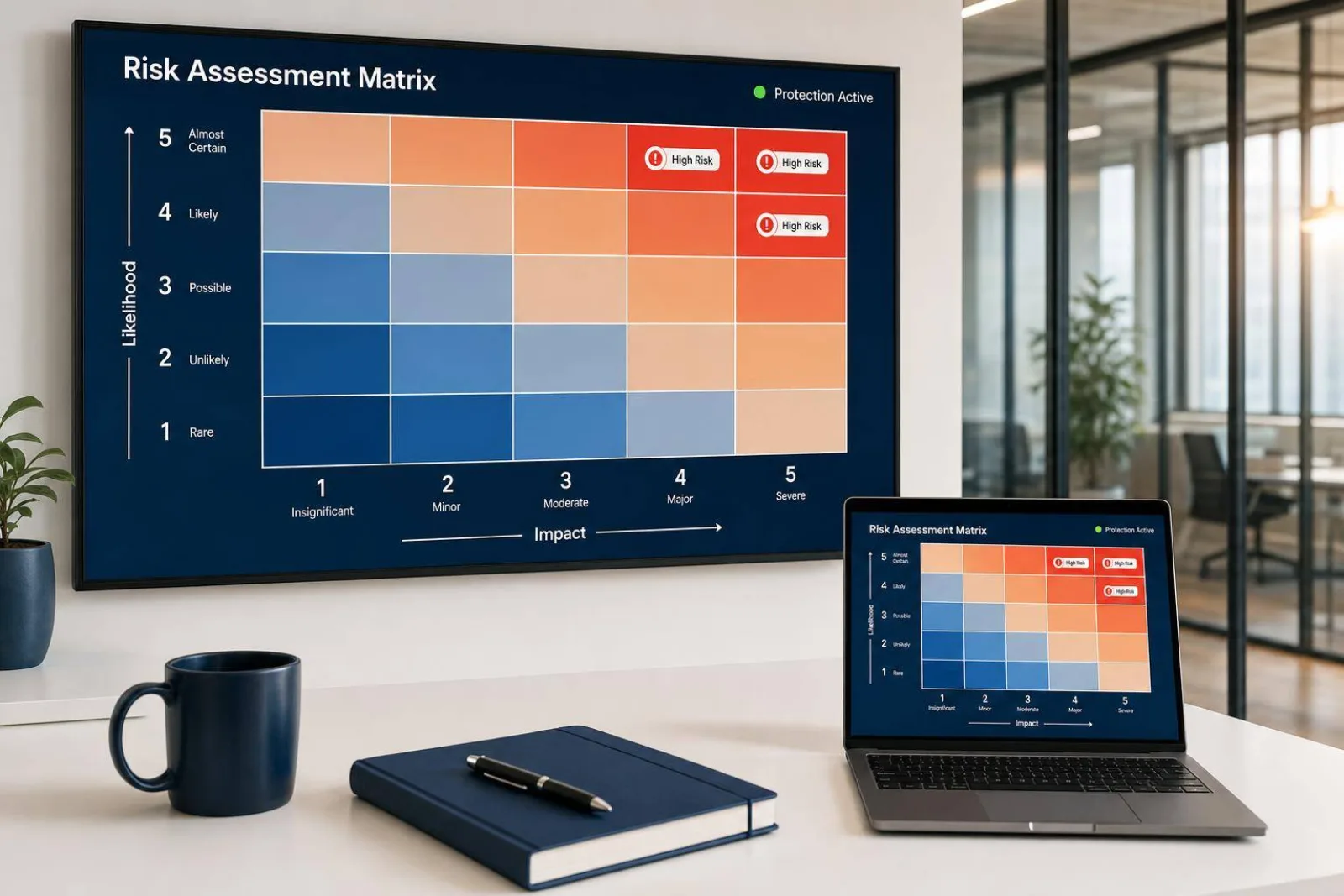
Risk Assessment Matrix
Simple Risk Scoring Without the Guesswork
A risk assessment matrix helps you turn broad concerns into clear, ranked priorities. Instead of debating which issue feels most urgent, you can score each risk by likelihood and impact, then place it on a visual grid that shows where attention is needed first. That makes the tool useful for project planning, operational reviews, compliance checks, and everyday business decisions.
Clear Ratings You Can Explain
This risk assessment matrix uses a familiar 5x5 model, so the logic is easy to follow. Enter a risk, assign scores from 1 to 5, and the tool calculates the total with a simple multiplication formula. From there, each item is grouped into a rating band such as Low, Moderate, High, or Critical. The result is practical, not abstract: a quick way to identify which risks need monitoring and which require action now.
Built for Real-World Planning
A strong likelihood and impact matrix should be easy to update as conditions change. This tool lets you review multiple risks in one session, compare them side by side, and see the highest-priority items at a glance. Whether you're managing a project timeline, reviewing operational gaps, or organizing personal planning risks, it gives you a structured way to assess exposure without adding unnecessary complexity.
FAQs
How is the risk score calculated?
The score is calculated with a straightforward formula: likelihood multiplied by impact. If a risk has a likelihood of 4 and an impact of 5, the score is 20. That simple method keeps the process transparent, which is helpful when you need to explain priorities to a team, manager, client, or auditor.
What do Low, Moderate, High, and Critical mean?
These labels group scores into practical priority bands so you can act faster. A common setup is to treat lower scores as Low, middle scores as Moderate, higher scores as High, and the top end as Critical. The exact score bands can be adjusted to fit your organization, project, or personal planning style, but the goal stays the same: make risk levels easy to compare and easy to communicate.
Who is this risk matrix tool useful for?
It works well for project managers, operations teams, compliance reviewers, business owners, and anyone doing structured planning. You can use it to review delivery risks, process issues, vendor concerns, safety items, or even personal decision-making. Because the scoring model is simple and visual, it fits both formal business workflows and lighter day-to-day planning.