
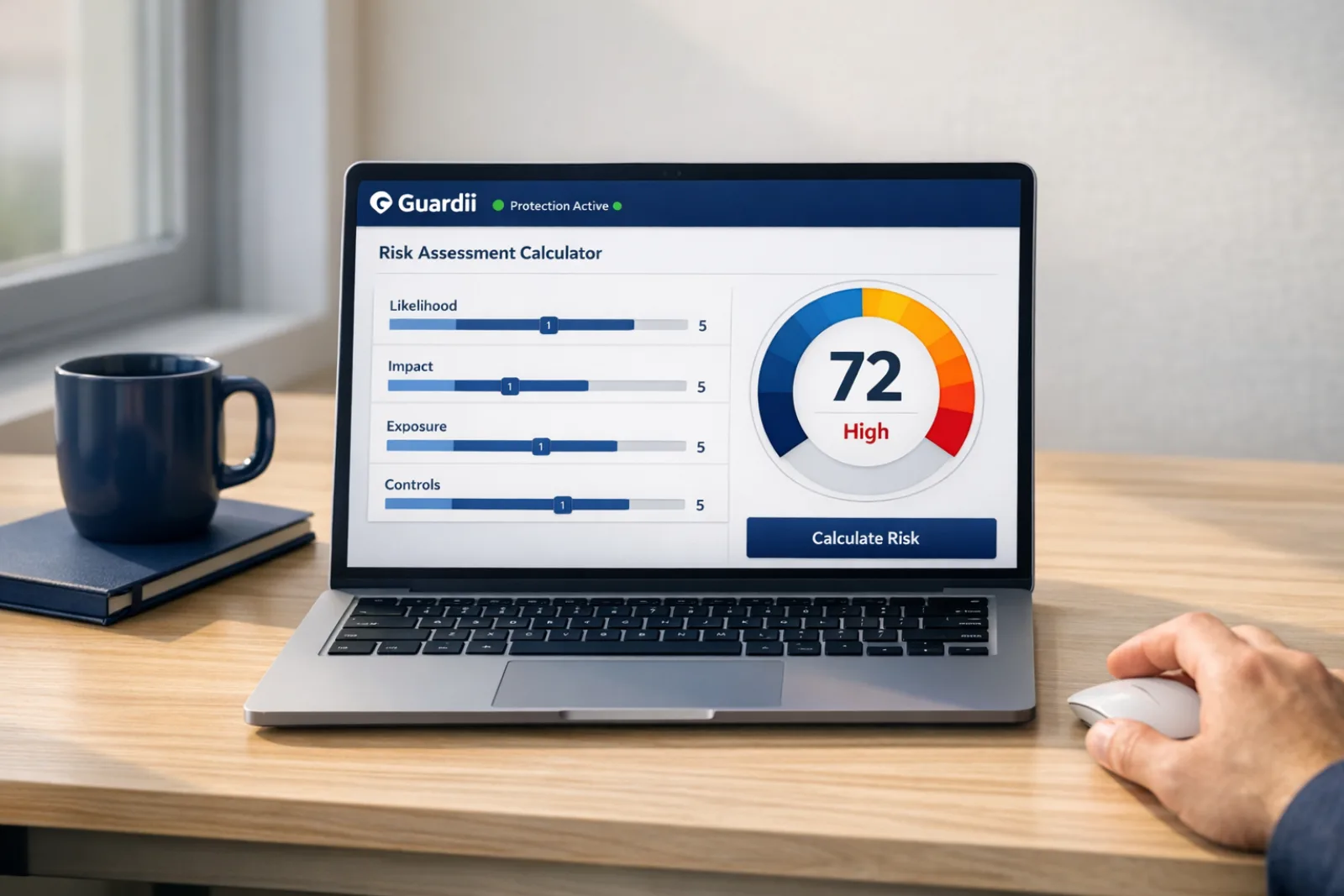
Risk Assessment Calculator
Practical Risk Scoring Made Simple
A risk assessment calculator helps teams move from vague concern to a clearer, more consistent view of risk. Instead of relying on gut feel alone, you can score likelihood and impact, then adjust the result with optional factors like exposure and control strength. That makes it easier to compare issues across projects, operations, safety reviews, and compliance screening.
Why a Simple Risk Tool Matters
In day-to-day work, people often need a fast answer before launching a deeper review. A straightforward risk assessment calculator supports that need by turning common qualitative judgments into a transparent numeric score. You can quickly identify which items appear manageable and which ones deserve closer attention.
Useful for Screening, Prioritizing, and Communication
This kind of risk scoring tool is especially helpful when teams want a shared language for prioritization. A clear score breakdown shows how each factor affected the result, which makes conversations with stakeholders much easier. Whether you're reviewing a project issue, a workplace hazard, or a control gap, a risk assessment calculator gives you a practical way to screen and sort risks without adding unnecessary complexity.
FAQs
How is the risk score calculated?
The calculator uses a simple and consistent formula so the result stays easy to understand. A common starting point is likelihood multiplied by impact. If exposure is included, the score can be weighted upward to reflect how often the risk is present. If control effectiveness is included, strong controls can reduce the final score while weak controls can keep it higher. The exact math is meant to be transparent, so users can see how each factor contributes to the outcome.
What does the risk level label mean?
The label translates the numeric score into a practical category such as Low, Moderate, High, or Critical. That makes it easier to scan results quickly and decide where to focus attention first. A Low score usually suggests limited concern in the current context, while High or Critical scores point to issues that may need stronger controls, closer review, or faster action. It’s a screening aid, not a substitute for formal risk governance.
Can I use this tool for compliance or safety decisions?
You can use it as a quick first-pass assessment for compliance, safety, operational, or project-related reviews. It’s useful for triage, prioritization, and documenting a consistent scoring approach across common scenarios. That said, it should not replace legal advice, regulatory interpretation, or a formal risk assessment method required by your organization or industry. Think of it as a practical starting point that helps structure judgment, not the final authority.